Bio Inc. Total Defense Defenses Tier List
How hunters, barriers, control, and burst tools stack up inside the body—day-one rankings with honest caveats.
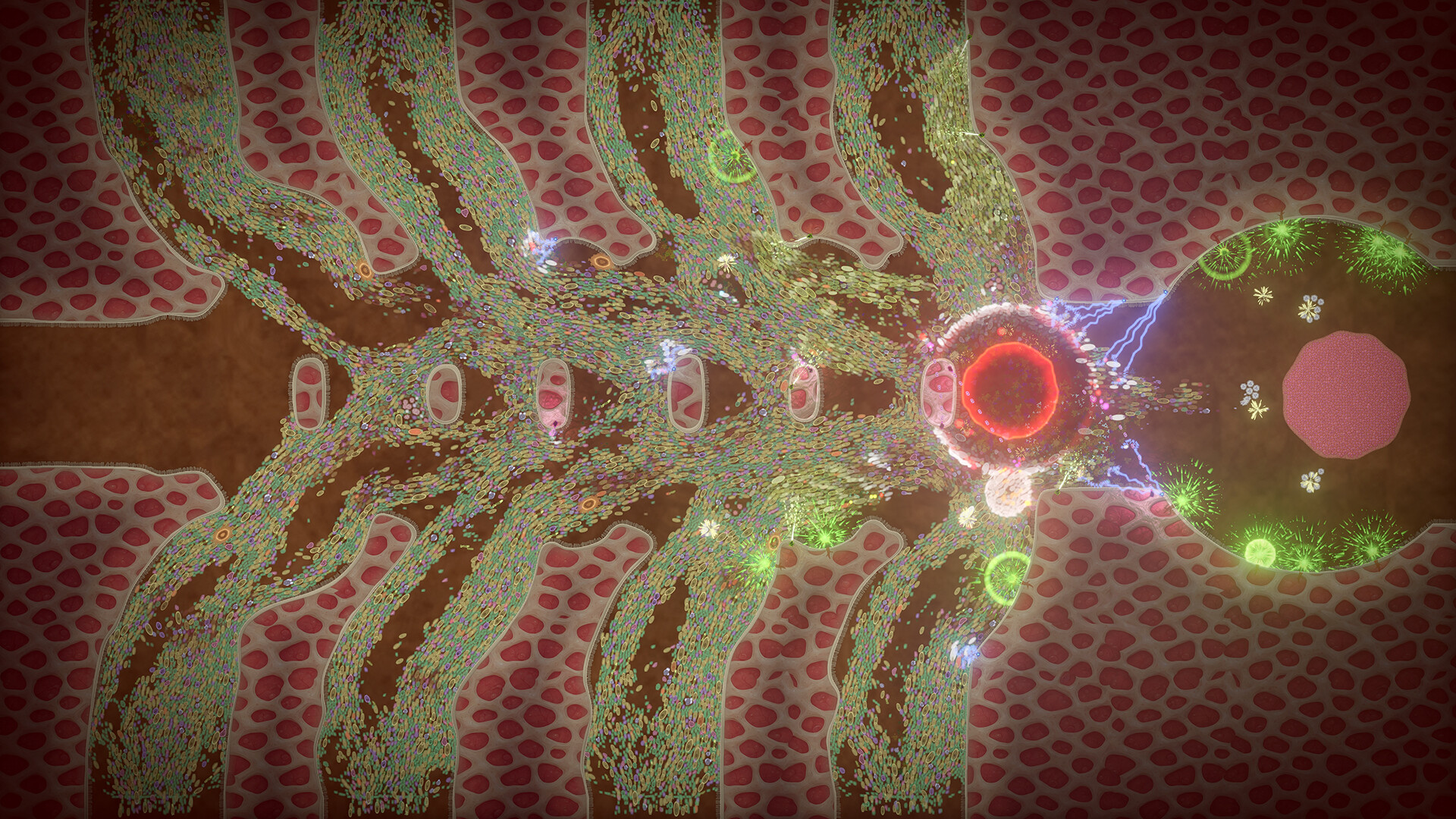
This page ranks the known immune defenses in Bio Inc. Total Defense. DryGin Studios ships eleven defenses total. Steam marketing confirms hunters (white blood cells, macrophages), barriers and control (tissue walls, mucus), and burst tools (fever blasts, acid glands, antibody cannons). Gameplay coverage also highlights neural shocks. The once-per-battle septic shock special is not a placeable tower in the same sense, but it is part of how you clutch dense continuous-spawn fights, so it appears in the notes below.
Important: the game launched on Steam on November 27, 2026. Meta will evolve. Use this list with upgrade builds, the Tier List Hub, and Getting Started. We refuse to invent unofficial defense names for the remaining slots—when community docs settle, those entries will be added here.
Ranking rules
- Map pressure: pathogens keep coming; there are no polite wave breaks.
- Role coverage: every strong line needs damage, slow/block, and a panic button.
- Upgrade dependence: some tools need Bio Points and Research unlocks before they feel fair.
- Organ variety: lungs, stomach, heart, brain, muscles, and blood vessels reward different kits across the 12 campaign levels, plus 3 bonus stages and Hardcore Mode.
S tier — core carriers
Macrophages (hunt)
Macrophages are the aggressive hunters of the kit. They excel when you need mobile or focused cleanup on dense pathogen clumps instead of pure static DPS. On continuous-spawn maps they punish leaks that would otherwise snowball into organ failure. Pair them with a slow layer so they are not chasing forever. Early Bio Points that improve hunt range, damage, or retarget speed usually pay off faster than cosmetic side nodes.
Why S: flexible cleanup, strong with Chain Reaction-style health factors, scales into late campaign when hordes thicken.
White blood cells (hunt)
White blood cells are the reliable hunter baseline. They are less “specialist” than macrophages in fantasy terms, but they form the backbone of many early and mid campaign lines. Place them where pathing is predictable—vessel chokepoints and organ approaches—so their hunt loops stay efficient. They also teach new players the difference between a hunting defense and a wall.
Why S: always useful, easy to slot, synergizes with almost every slow and burst tool.
Mucus (slow)
Mucus is control. In a game without wave downtime, slow is often worth more than a second damage tower in the same tile budget. Mucus stretches time-to-kill so hunters and cannons finish their jobs. It is especially valuable on long vessel paths and any stage where pathogens accelerate or stack.
Why S: multiplies every other defense; Hardcore and bonus stages punish missing control.
A tier — excellent with the right plan
Tissue walls
Tissue walls buy time and reshape pathing. They are not your primary DPS, but they create the geometry that makes hunters efficient. Overbuilding walls without damage is a common beginner mistake; underbuilding them on wide organ approaches is how septic panic starts. Use walls to funnel, then fill the funnel with mucus and hunters.
Why A: stage-dependent value; incredible when pathing is chaotic, merely fine on already narrow maps.
Antibody cannons (burst)
Antibody cannons are burst specialists for clumps and elites. Continuous spawn means you cannot wait for a perfect “wave,” so cannons shine when you trigger them as density peaks. Ability-charge health factors and Research unlocks that shorten downtime push cannons toward S on later organs.
Why A: huge when charged and aimed; awkward if you spam them with empty charges.
Fever blasts (burst)
Fever blasts are area panic tools. They clear space when hunters are overloaded and buy a reset window before the next density spike. Because septic shock is limited to once per battle, fever blasts are your repeatable emergency layer. Save them for true emergencies on Hardcore.
Why A: clutch potential; weaker if used as primary DPS instead of timed burst.
Acid glands (burst)
Acid glands lean into sustained burn or corrosive burst depending on how DryGin tuned the full kit at launch. They reward players who stack damage-over-time health factors and who place glands where pathogens linger in mucus. On fast vessel stages they need help from slows; on packed organ interiors they can melt groups that walk through the puddle.
Why A: strong synergy piece; less forgiving if placed off the main path.
B tier — situational or upgrade-hungry
Neural shocks
Neural shocks appear in gameplay discussion as a disruptive / shock-style tool. Treat them as situational crowd control or interrupt depending on stage. They rise quickly if a health factor amplifies shockwaves or if a Workshop map spams stun-sensitive pathogens. Until your Bio Point tree supports them, they can feel like a luxury slot compared with mucus plus hunters.
Why B (for now): high skill and upgrade dependency; watch patches and upgrade builds for promotions.
Undocumented defenses (remaining kit)
Three (or more, depending on how you count specials) of the eleven defenses are not fully named in the short store blurbs used for this wiki pass. Do not assume community nicknames are official. When you unlock a new defense in-campaign, test it for one clear role—hunt, wall, slow, or burst—then compare it against the S/A pieces above before rebuilding your whole line.
Special mention: septic shock
Septic shock is a massive once-per-battle shockwave tool. It is not a replacement for good placement. Ideal use cases: simultaneous multi-lane leaks, brain or heart stages where a single breach ends the run, or Hardcore spikes after you have already spent fever/cannon charges. Burning septic shock on the first scary clump is a common way to lose a winnable fight ten minutes later.
Sample line archetypes
- Vessel funnel: tissue walls → mucus corridor → white blood cells / macrophages → antibody cannon on the exit.
- Organ panic kit: hunters on main path, acid gland on a linger zone, fever blast held for density peaks, septic shock reserved.
- Hardcore sustain: more mucus and wall depth, hunters over greedy burst, Bio Points into Last Stand / immunity / charge recovery before exotic nodes.
How to use this with builds and guides
- Spend Research Points to unlock missing roles before duplicating the same hunter three times—see upgrade builds.
- Learn organ flow in the Guides Hub and Getting Started.
- After patches, check launch notes and the Updates Hub.
- Confirm your PC can handle dense particle fights via system requirements.
Final caveats
Day-one tier lists are hypotheses backed by store facts and early play patterns. DryGin already showed during the demo that they listen—pathogen health was cut 15% in the demo after difficulty feedback, while the full game keeps its own balance with the complete upgrade tree. If a patch nerfs mucus or buffs neural shocks, this page moves. Until then: cover hunt + slow + burst, funnel with walls, and treat septic shock as a finite clutch, not a plan.
Frequently Asked Questions
Quick answers to the most common questions.
Why are some of the eleven defenses missing by name?
This wiki only ranks store-confirmed and clearly documented defenses. Remaining kit slots will be added with official or widely verified names—no invented labels.
Is mucus really S tier?
In a continuous-spawn tower defense, reliable slow multiplies every hunter and burst tool. That makes mucus a default S until a patch changes control math.
Should I save septic shock every fight?
Yes for Hardcore and tough organs. Use repeatable fever blasts and cannons first; septic shock is once per battle.
Do Workshop maps follow this list?
Not always. Community stages can break pathing assumptions. Use the roles (hunt/slow/burst/wall) even when specific rankings shift.
Where should I spend Bio Points for defenses?
Follow the upgrade-builds page for node priority. Generally fund your weakest role first, then deepen your S-tier hunters and mucus.