Bio Inc. Total Defense Organs & Body Systems Map
How lungs, heart, brain, stomach, muscles, and blood vessels change placement jobs across the campaign.
Bio Inc. Total Defense turns the human body into a tower-defense battlefield. DryGin Studios ships twelve unique levels that move through circulatory vessels, respiratory tissue, nervous-system maps, digestive pressure, muscle beds, and related organ themes—then adds three bonus stages and Hardcore Mode for mastery. This page is the body map: what each organ family asks of your immune line, which jobs fail first, and where to read deeper route tips.
Pair this overview with the concrete capillary → artery → lung → brain → heart route on the Stage Walkthrough, placement fundamentals in How to Play, and post-campaign tracks in Hardcore & Bonus Stages.
How to read an organ stage
Every stage shares the same rules:
- Pathogens spawn continuously — no polite wave breaks.
- You place defenses along vessels and tissue approaches that feed an organ fail state.
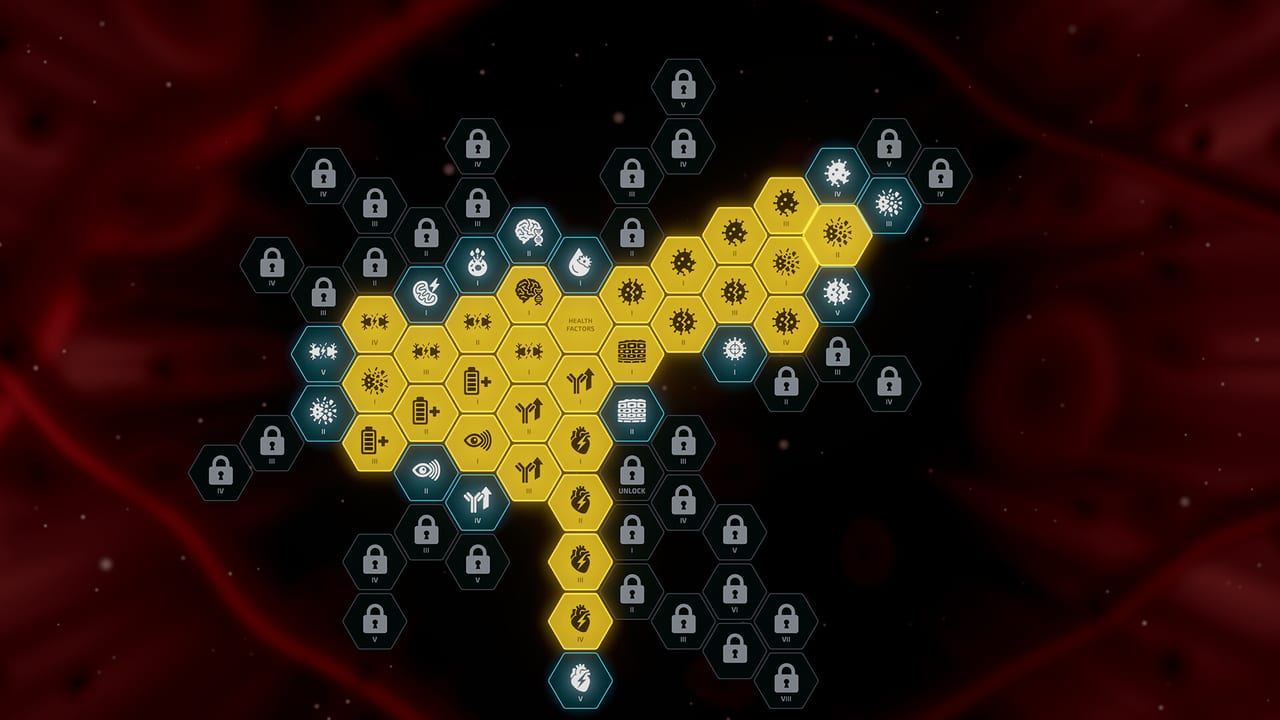
- Clears pay Bio Points; Research Points unlock defenses; ~75 health factors tune clutch behavior.
- Septic shock is a once-per-battle shockwave, not a plan.
Organ themes change geometry and pressure, not the core economy. When you fail, ask which job leaked—hunt, slow/wall, or burst—before rebuilding the whole tree. Rankings live on the defenses tier list.
Circulatory — capillaries, arteries, heart, vessels
Capillaries teach flow. Entrances are readable, counts start in the hundreds, and the lesson is honest placement: hunters on the main vessel, one slower at the first merge, ignore prestige layouts.
Arteries raise density. Packs thicken, merges matter, and your first serious choke blast earns its keep. Practice holding septic shock for the true late surge.
Heart stages compress everything: high flow, lethal fail timers, and surges that want antibody cannons or equivalent heavy clears once Research unlocks them. Dual-path hunter coverage is the default opener.
Wider blood-vessel maps (including later campaign and bonus layouts) stretch attention across long corridors. Mucus corridors and tissue funnels outperform isolated DPS stacks.
Job priority: hunt + slow first; add burst when merges form visible clumps.
Respiratory — lungs
Lung / infection maps widen the fight. Multiple airways mean a single tower cluster cannot see every pack. Split hunters across major paths, mirror lighter slowers on contested branches, and keep one blast flexible for the denser airway.
Health factors that restore ability charges shine here—empty fever bars fail lung runs often. Demo players frequently stall on lung missions; farm Bio Points on earlier circulatory stages if upgrades lag, then return. Deep route notes: Stage Walkthrough.
Job priority: split attention and rechargeable burst over a single overbuilt choke.
Nervous system — brain
Brain maps punish slow reactions and poor vision of merges. Neural shocks become relevant once unlocked because disruptive pressure helps when packs fork toward sensitive tissue.
Prioritize early hunter coverage on the fastest path to the organ. Place slowers where you can still see the pile—brain geometry loves hiding clumps behind junctions. Hold septic shock longer than on artery; fake scares are common.
If brain feels impossible with strong DPS, check whether your blast choice matches density, then rebuild rather than stacking identical hunters on one vessel.
Job priority: vision of merges, interrupt/control, and organ padding (Last Stand / immunity factors).
Digestive — stomach
Stomach-themed stages lean into linger zones and corrosive synergy. Acid glands and mucus pairs often outperform pure hunter spam when pathogens sit in puddles or slow corridors. Watch for pathing that looks open but funnels into a digestive choke late.
Spend Research on the burst tool that matches how long enemies linger. If packs sprint through without pausing, rebuild geometry with tissue walls before buying more acid nodes.
Job priority: linger damage + funnel geometry; hunters clean what escapes the puddle.
Muscles and connective pressure
Muscle beds and related tissue maps stress space management. Wide arenas tempt players to sprinkle towers everywhere; continuous spawn punishes that. Rebuild a funnel, then fill it.
Expect longer stages and incremental Bio Point gains between attempts. Muscle clears are where screenshot-worthy “cover the whole map” layouts usually lose to a boring corridor that actually works.
Job priority: funnel first, then deepen hunters inside the funnel.
Bonus organs and Hardcore overlays
Bonus stages remix the families above with nastier merges or multi-entrance layouts. Hardcore Mode applies thinner margins to the same organ themes—see Hardcore & Bonus Stages. Do not treat Hardcore as a new organ list; treat it as the same body with less forgiveness.
Workshop creators can invent new vessel graphs, but fair community maps still read as one of these families. When you publish, label the organ theme and recommended defenses—editor help: Workshop & Editor.
Quick reference table
| Body family | Typical pressure | First fix when failing |
|---|---|---|
| Capillary / early vessel | Teaching density | Placement honesty, not more towers |
| Artery | Thicker packs | Choke blast + septic timing |
| Lung | Split attention | Mirror hunters/slowers per airway |
| Brain | Hidden merges | Vision + interrupt + padding |
| Heart | Lethal timers | Dual-path openers + reserved heavy clear |
| Stomach | Linger / corrosive | Mucus + acid synergy |
| Muscle / wide tissue | Space greed | Funnel, then fill |
| Bonus / Hardcore | Remix + thin margins | Weakest-role funding |
Economy reminders that apply to every organ
- Bio Points deepen what you already place; Research Points unlock missing roles.
- Cover hunt + slow + burst before vanity nodes—upgrade builds.
- Demo upgrades stop early; full game balance differs—Demo Balance Update.
- Confirm PC comfort on dense particle organs via system requirements.
- Track patches on launch notes when DryGin tunes organ HP or spawn curves.
Related wiki routes
- Full route tips: Stage Walkthrough
- Day-one checklist: Getting Started
- Guides index: Guides Hub
- Meta lists: Tier List Hub
- Official links: Links Hub
Learn the body family first, then memorize the specific stage. Capillary habits still win heart clears; only the margins change.
Frequently Asked Questions
Quick answers to the most common questions.
Which organs appear in the campaign?
Launch coverage highlights lungs, stomach, heart, brain, muscles, and blood vessels across twelve unique levels, plus three bonus stages and Hardcore Mode.
Is this page a full walkthrough?
No. It maps organ families and jobs. For capillary-to-heart route detail, use the Stage Walkthrough page.
Why do lung stages feel harder than arteries?
Lungs split attention across airways. A single tower cluster misses packs; mirror hunters and slowers, and keep a flexible blast.
Do stomach stages need acid glands?
Acid plus mucus synergy is strong when enemies linger. If packs never pause, fix funneling with tissue walls before stacking more acid.
Does Hardcore add new organs?
Hardcore tightens margins on the same body themes. Prep on the Hardcore & Bonus Stages guide before treating it as a new map list.